
Indian Homes Embrace Natural Materials and Smarter Design in 2026
Indian Home Decor Trends 2026: Why Comfort, Natural Materials and Climate-Smart Design Are Taking Centre Stage
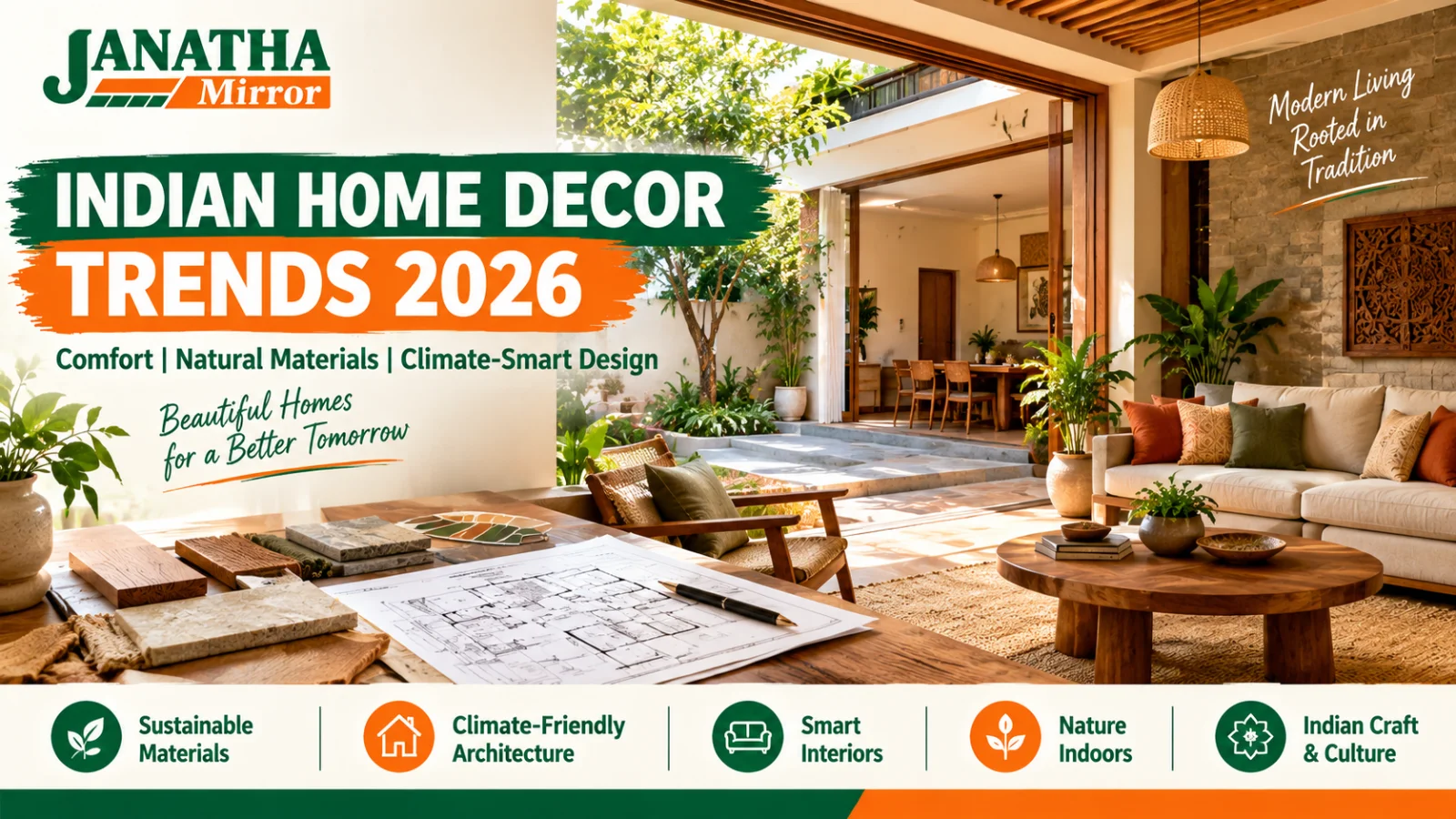
Indian Home Decor Trends 2026
Indian home design is moving towards warmer interiors, sustainable materials and climate-responsive architecture. Discover the practical trends shaping comfortable, modern homes in 2026.
Indian Home Decor Trends 2026: Why Comfort, Natural Materials and Climate-Smart Design Are Taking Centre Stage
Indian homes are undergoing a noticeable design shift in 2026. Instead of focusing only on expensive furniture, decorative walls and fashionable finishes, homeowners are paying greater attention to comfort, durability, natural light and practical layouts. Warm colour palettes, locally inspired materials, flexible rooms and climate-conscious architecture are becoming important elements of modern residential design.
Grow Your Business with Janatha Mirror
Reach 50,000+ daily readers across Andhra & Telangana
The change reflects a simple idea: a beautiful home should also work well for everyday life. Whether it is a compact city apartment or an independent house, the growing preference is for spaces that feel personal, remain easy to maintain and respond to local weather conditions.
Grow Your Business with Janatha Mirror
Reach 50,000+ daily readers across Andhra & Telangana
1. Natural Materials Are Becoming a Design Favourite
Natural materials are finding a stronger place in contemporary Indian interiors. Wood, stone, bamboo, cane, terracotta, cotton and jute can add warmth and texture without making a room look overly decorative.
Homeowners are also showing interest in materials that last longer and need fewer replacements. Reclaimed wood, locally sourced stone and handcrafted furniture can help reduce waste when selected responsibly.
Grow Your Business with Janatha Mirror
Reach 50,000+ daily readers across Andhra & Telangana
For kitchens and wardrobes, durability matters as much as appearance. Buyers should check moisture resistance, surface quality, hardware strength and maintenance requirements before choosing boards or finishes.
The key is not to use natural materials everywhere. A wooden feature, cane cabinet shutters or a stone-finish surface can create character without increasing the overall cost unnecessarily.
2. Earthy Colours Replace Cold, Uniform Interiors
Warm neutrals and nature-inspired shades are influencing home colour choices. Terracotta, beige, sand, olive green, muted mustard, caramel and earthy brown can create a welcoming atmosphere.
These colours work particularly well in living rooms and bedrooms. They can also be combined with natural wood, textured fabrics and simple lighting to create a balanced appearance.
Curved furniture, rounded mirrors and circular coffee tables are adding softness to interiors dominated by straight lines. However, homeowners do not need to replace every piece of furniture to follow this trend. One accent chair, a rounded mirror or a curved side table may be enough.
3. Climate-Smart Architecture Gains Importance
Architecture is increasingly expected to respond to the local climate rather than depend entirely on mechanical cooling and artificial lighting.
In warmer parts of India, shaded balconies, roof overhangs, ventilated spaces, suitable window placement and cross-ventilation can improve indoor comfort. Courtyards, verandas and covered outdoor areas can also create useful transitions between indoor and outdoor living.
For new houses, architects can study the direction of sunlight, prevailing winds, rainfall and surrounding buildings before finalising the layout. These decisions can influence how much heat enters the house and how naturally fresh air moves through it.
Existing homeowners can also make smaller improvements. Proper curtains, external shading, ventilated openings and energy-efficient lighting may improve comfort without requiring a complete renovation.
4. Flexible Rooms and Smart Storage Support Modern Living
Homes now serve several purposes. A living room may become a work area during the day, while a spare bedroom may be used for studying, guests or hobbies.
This is encouraging interest in movable partitions, foldable furniture, multipurpose tables and well-planned storage. Floor-to-ceiling wardrobes, pull-out kitchen units and concealed storage can help make smaller homes more organised.
Before purchasing furniture, homeowners should measure the available space and consider walking paths, door openings and daily routines. A room filled with attractive furniture can still feel uncomfortable if movement is restricted.
5. Nature and Wellness Enter Everyday Interiors
Natural light, indoor plants, balcony gardens and small relaxation corners are becoming useful parts of residential design.
A sunny window ledge can support a small plant collection, while a balcony can become a reading corner or compact garden. In larger houses, courtyards and landscaped spaces can connect rooms with the outdoors.
Good ventilation and suitable daylight should remain priorities. Plants can improve the visual appeal of a room, but they should not be treated as a substitute for proper ventilation or indoor air-quality management.
6. Traditional Indian Craftsmanship Finds a Modern Place
Indian craft traditions offer ideas that can work beautifully in contemporary homes. Athangudi tiles, Kota stone, cane weaving, handmade pottery, carved wooden details and regional textiles can add cultural identity to otherwise simple interiors.
The appeal lies in combining old and new thoughtfully. A traditional tile floor can sit alongside modern furniture, while handcrafted lamps or textiles can add colour to a neutral room.
Such choices also allow homeowners to create distinctive spaces instead of copying identical showroom designs.
7. How to Update a Home Without Overspending
Following every new trend can make renovation expensive. A practical approach is to separate long-term decisions from easily replaceable decorative choices.
Invest in durable flooring, kitchen fittings and storage hardware.
Use paint, cushions and curtains to introduce seasonal colours.
Choose one feature wall rather than decorating every wall.
Compare maintenance needs before selecting a material.
Keep enough natural light and ventilation in the layout.
Ask contractors for itemised quotations before approving work.
Frequently Asked Questions
1. What are the biggest Indian home decor trends in 2026?
Natural materials, earthy colours, curved furniture, smart storage, indoor greenery and flexible layouts are among the visible design directions.
2. Which colours are suitable for modern Indian homes?
Beige, terracotta, olive green, sand, caramel and warm brown can create comfortable interiors. The best choice depends on room size, natural light and personal preference.
3. How can I make my home cooler naturally?
Consider cross-ventilation, shaded windows, roof insulation, suitable curtains and climate-appropriate building materials. A qualified architect can recommend solutions for the local climate.
4. Are sustainable materials expensive?
Not always. Locally available materials, reclaimed furniture and durable finishes may offer practical options. Compare the full cost, maintenance and expected lifespan rather than only the purchase price.
5. How can small homes look spacious?
Use multifunctional furniture, vertical storage, lighter colour combinations, good lighting and clear walking spaces. Avoid overcrowding rooms with decorative items.
6. Is traditional Indian decor suitable for modern houses?
Yes. Regional tiles, textiles, pottery, woodwork and handcrafted accessories can complement contemporary layouts when used selectively.
7. Should homeowners follow every interior design trend?
No. Choose trends that suit the family's lifestyle, budget and maintenance needs. Durable design decisions are generally more valuable than temporary decorative fashions.
Conclusion
The direction of Indian home decor in 2026 is increasingly centred on comfort, climate awareness, personal identity and long-term value. Natural materials, flexible layouts and traditional craftsmanship can make homes more distinctive, while thoughtful architecture can improve everyday living.
Rather than spending heavily to follow every new trend, homeowners can create better spaces by making informed choices about materials, lighting, ventilation and storage. The most successful home is not necessarily the most expensive one; it is the one that supports the people who live in it.
💬 Reader Opinions & Discussion0
Login Required to Share Your Opinion
Only verified and logged-in readers can post opinions on Janatha Mirror news stories.