
Why Do Married Hindu Women Celebrate Karwa Chauth? The Meaning Behind This Tradition
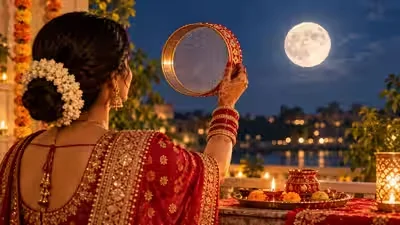
Discover why married Hindu women celebrate Karwa Chauth, the story of Veeravati, traditional fasting rituals and the meaning of Moon-sighting.
India celebrates many festivals that reflect faith, family relationships and cultural traditions. Karwa Chauth is one such festival, observed predominantly in several North Indian communities. Married Hindu women traditionally fast and pray for their husbands' long life, good health and well-being. The day often includes a pre-dawn meal, evening prayers and a special Moon-sighting ritual. But why is this festival celebrated, and what is the story behind its customs?
What Is Karwa Chauth and Why Is It Celebrated?
Karwa Chauth is observed on the fourth day of the waning lunar fortnight in the Hindu month associated with Kartik. The word “Karwa” refers to a traditional earthen pot, while “Chauth” means the fourth lunar day. According to custom, women observe the fast and offer prayers for their husbands' well-being and the happiness of their families. The festival is particularly popular in states such as Punjab, Haryana, Rajasthan and Uttar Pradesh, although not all Hindu communities observe it.
Grow Your Business with Janatha Mirror
Reach 50,000+ daily readers across Andhra & Telangana
From Sargi to Moonrise: How Is the Festival Celebrated?
In many households, the day begins before sunrise with Sargi, a traditional meal often given by a mother-in-law to her daughter-in-law. It may include fruits, sweets and dry fruits. Some women then observe a fast without food or water until the Moon appears. In the evening, they perform prayers associated with Goddess Parvati, Lord Shiva and Lord Ganesha, and listen to the Karwa Chauth Vrat Katha. After sighting the Moon, they offer water as part of the ritual and break their fast according to their family traditions.
The Story of Veeravati: A Popular Traditional Legend
One of the best-known stories associated with Karwa Chauth is the legend of Veeravati, the only sister among seven brothers. According to the traditional tale, Veeravati observes her first Karwa Chauth fast after marriage. As she becomes weak from hunger and thirst, her brothers create the appearance of a rising Moon using a light. Believing that the Moon has appeared, she breaks her fast early. She subsequently learns that her husband has suffered a tragic fate. The story says that her renewed devotion and observance eventually lead to her husband's return to life. Details vary between regional versions, and the account is best understood as a religious legend rather than a verified historical event.
Why Do Women Look at the Moon Through a Sieve?
The Moon-sighting ritual is one of the most recognisable customs of Karwa Chauth. After the evening prayers, women traditionally look at the Moon through a sieve and, in many families, then look at their husbands through the same sieve. They offer water to the Moon and may receive water or food from their husbands to end the fast. The ritual is commonly associated with devotion, affection and the marital bond. The exact sequence can differ between regions and families.
Grow Your Business with Janatha Mirror
Reach 50,000+ daily readers across Andhra & Telangana
Read also:Diwali: Want to Celebrate the Festival of Lights in a Special Way? Visit These 4 Amazing Places!
How Is Karwa Chauth Changing in Modern Times?
While the traditional observance focuses on a wife's prayers for her husband's well-being, some couples now treat Karwa Chauth as a shared celebration of love and companionship. Some husbands fast alongside their wives, while others mark the occasion by exchanging gifts or spending time together. Practices depend on personal beliefs, family traditions and individual choices. Karwa Chauth is not a universal requirement for all married Hindu women.
Grow Your Business with Janatha Mirror
Reach 50,000+ daily readers across Andhra & Telangana
Health Precautions to Remember
Some devotees observe a fast without consuming either food or water. However, prolonged fasting without water may not be safe for everyone. Pregnant women, people with medical conditions and those taking regular medication should seek medical advice before undertaking such a fast. Anyone who feels unwell should prioritise their health rather than continue fasting at the expense of their well-being.
Karwa Chauth remains a meaningful tradition for many families, bringing together religious faith, cultural heritage and expressions of care between partners. Although the way people celebrate may evolve over time, the festival continues to hold an important place in the lives of those who observe it.
💬 Reader Opinions & Discussion0
Login Required to Share Your Opinion
Only verified and logged-in readers can post opinions on Janatha Mirror news stories.