
Supreme Court Bans Mid-Term Fee Hikes in Professional Courses
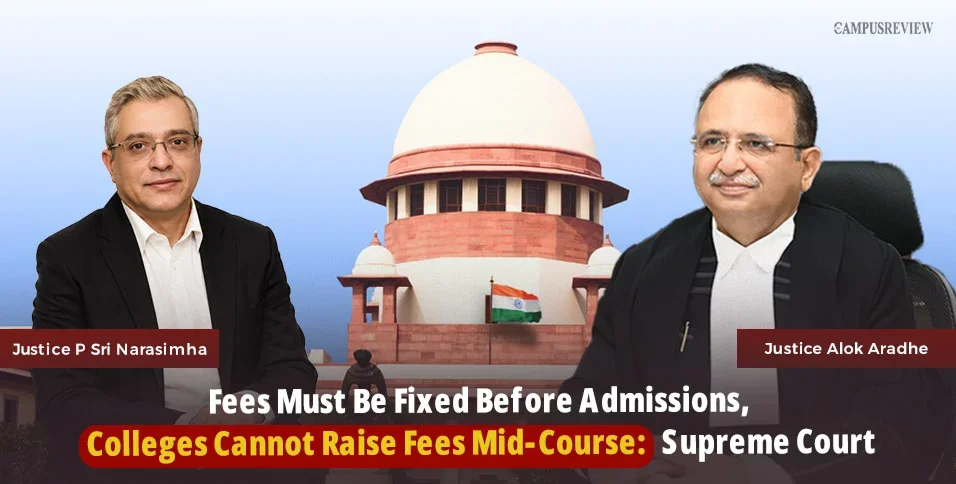
Supreme Court fee hike ruling
The Supreme Court of India has ruled that professional educational institutions cannot ordinarily increase course fees midway through an ongoing programme, except in exceptional circumstances such as an unforeseen rise in expenditure.
The judgment aims to protect students and their families from unexpected financial burdens and ensure transparency in college fee structures. The Court emphasised that students enrolling in professional courses should know the financial commitment involved before taking admission.
Grow Your Business with Janatha Mirror
Reach 50,000+ daily readers across Andhra & Telangana
What Did the Supreme Court Rule?
The Court held that the fees payable for the entire duration of a professional course should ordinarily be determined and announced before admissions begin. Any revision during the course must be limited to exceptional situations and cannot become a substitute for proper financial planning by educational institutions.
The ruling applies to professional programmes such as engineering, pharmacy and medicine offered by self-financing higher educational institutions.
Why Did the Court Intervene?
The case arose from a dispute involving Dr. B.C. Roy Engineering College in West Bengal. Students enrolled in the 2023–2027 B.Tech batch challenged a fee increase introduced after their admissions had been completed.
Grow Your Business with Janatha Mirror
Reach 50,000+ daily readers across Andhra & Telangana
The college revised its semester tuition fees and introduced an additional development fee, resulting in an overall increase of approximately 37.5%. The students challenged the decision, arguing that the revised fee structure should not be imposed on them after they had already enrolled.
The matter eventually reached the Supreme Court, which upheld the protection granted to students against the mid-course fee increase.
How Will the Decision Help Students?
The ruling is expected to provide greater financial certainty to students and their parents, many of whom depend on savings or education loans to fund professional degrees.
Grow Your Business with Janatha Mirror
Reach 50,000+ daily readers across Andhra & Telangana
By requiring fees to be determined in advance, the Court aims to help families plan their educational expenses without worrying about unexpected increases during the course.
The decision also stresses the importance of fee-fixation committees functioning efficiently and making timely recommendations before admissions commence.
Are Fee Increases Completely Prohibited?
The Supreme Court clarified that fee revisions are not prohibited in every possible situation. Exceptional circumstances, including unforeseen expenditure increases caused by extraordinary economic conditions or changes in law, may justify a revision.
However, such increases must remain exceptional. Educational institutions cannot rely on routine administrative delays or inadequate financial planning to justify raising fees midway through a course.
What Does the Verdict Mean for Colleges?
The judgment reinforces the responsibility of educational institutions and regulatory authorities to establish a transparent and predictable fee structure. At the same time, the Court recognised that private colleges need sufficient resources to maintain infrastructure, employ qualified faculty and provide quality education.
The ruling seeks to balance these institutional requirements with students' need for financial security.
The Supreme Court's decision strengthens fee transparency in professional education by making advance disclosure the norm and mid-course fee increases the exception. It provides important protection for students and families against unexpected educational expenses.
💬 Reader Opinions & Discussion0
Login Required to Share Your Opinion
Only verified and logged-in readers can post opinions on Janatha Mirror news stories.