What Is the Spiritual Significance of Om? Understanding the Sacred Sound
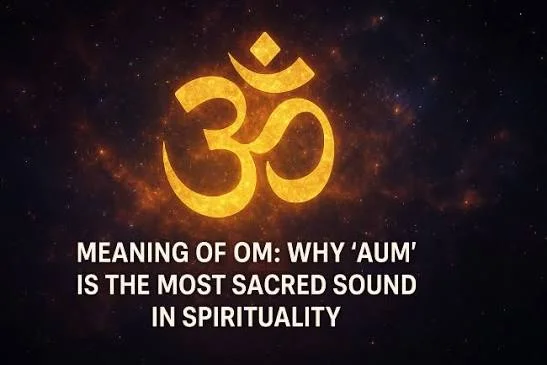
Discover the spiritual significance of Om (ॐ), the meaning of A-U-M, and why this sacred sound is chanted during Hindu prayer and meditation.
Om (ॐ) is one of the most sacred symbols and sounds in Hinduism. Often chanted during prayer, meditation, and yoga, it represents profound spiritual ideas about consciousness, the universe, and the connection between the individual and the divine.
What Does Om Mean?
Om, also written as Aum, is a sacred syllable found in ancient Indian spiritual traditions, particularly Hinduism. It is discussed in the Upanishads, philosophical texts that explore the nature of existence, the self, and ultimate reality.
Grow Your Business with Janatha Mirror
Reach 50,000+ daily readers across Andhra & Telangana
In Hindu philosophy, Om is often associated with Brahman, the ultimate reality underlying all existence. It is therefore more than a sound used in worship; it is also a symbol of spiritual understanding.
What Is the Significance of A-U-M?
Om is traditionally explained through three sounds: A, U, and M. Some spiritual interpretations associate them with different aspects of existence and consciousness.
A may represent waking consciousness.
Grow Your Business with Janatha Mirror
Reach 50,000+ daily readers across Andhra & Telangana
U may represent the dream state.
M may represent deep sleep.
The silence that follows the sound is interpreted in some traditions as a symbol of pure consciousness or the ultimate reality beyond ordinary experience.
Grow Your Business with Janatha Mirror
Reach 50,000+ daily readers across Andhra & Telangana
These explanations are especially associated with the Mandukya Upanishad, although interpretations can vary across traditions.
Why Is Om Chanted During Prayer and Meditation?
1. To Focus the Mind
Repeating Om can serve as a point of concentration during meditation. Paying attention to the sound and breath may help some people settle their attention.
2. To Express Spiritual Devotion
Om is often chanted at the beginning or end of prayers, mantras, and religious ceremonies. It marks a sacred moment and helps practitioners turn their attention toward worship.
3. To Reflect on the Universe and Existence
In Hindu spiritual thought, Om symbolizes the unity and underlying reality of existence. Chanting it can be a way for devotees to contemplate their relationship with the divine.
4. To Support a Calm Meditation Practice
Slow, comfortable chanting combined with relaxed breathing may feel calming for some people. However, individual experiences differ, and Om should not be treated as a guaranteed cure for stress or illness.
Why Is the Om Symbol Written as ॐ?
The written symbol ॐ represents the sacred syllable and its spiritual associations. It is commonly seen in temples, prayer spaces, religious texts, and meditation settings. For many Hindus, it serves as a visual reminder of devotion and the search for spiritual understanding.
Is Om Used Only in Hinduism?
Om has a central place in Hindu traditions and is also significant in other Indian religions, including Buddhism and Jainism, though its use and interpretation differ. It should not be assumed to have exactly the same meaning in every tradition.
Read also:
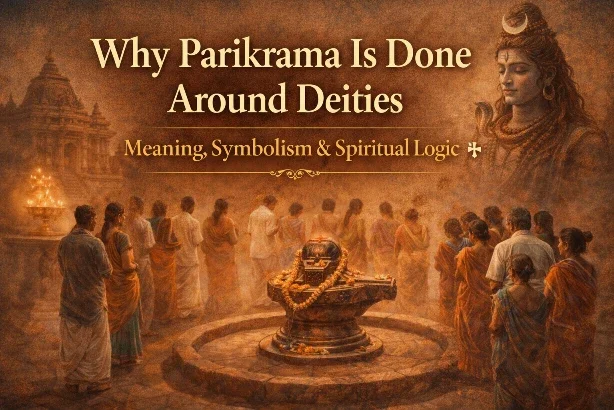
Why Is Pradakshina Performed Around a Deity?
The spiritual significance of Om lies in its association with sacred sound, consciousness, and ultimate reality. Through chanting, meditation, and prayer, many practitioners use Om as a way to focus the mind and deepen their spiritual reflection. Its meaning is rooted in ancient traditions and continues to hold an important place in spiritual life today.
💬 Reader Opinions & Discussion0
Login Required to Share Your Opinion
Only verified and logged-in readers can post opinions on Janatha Mirror news stories.