
Digital Arrest Scams: One Phone Call Could Put Your Life Savings at Risk
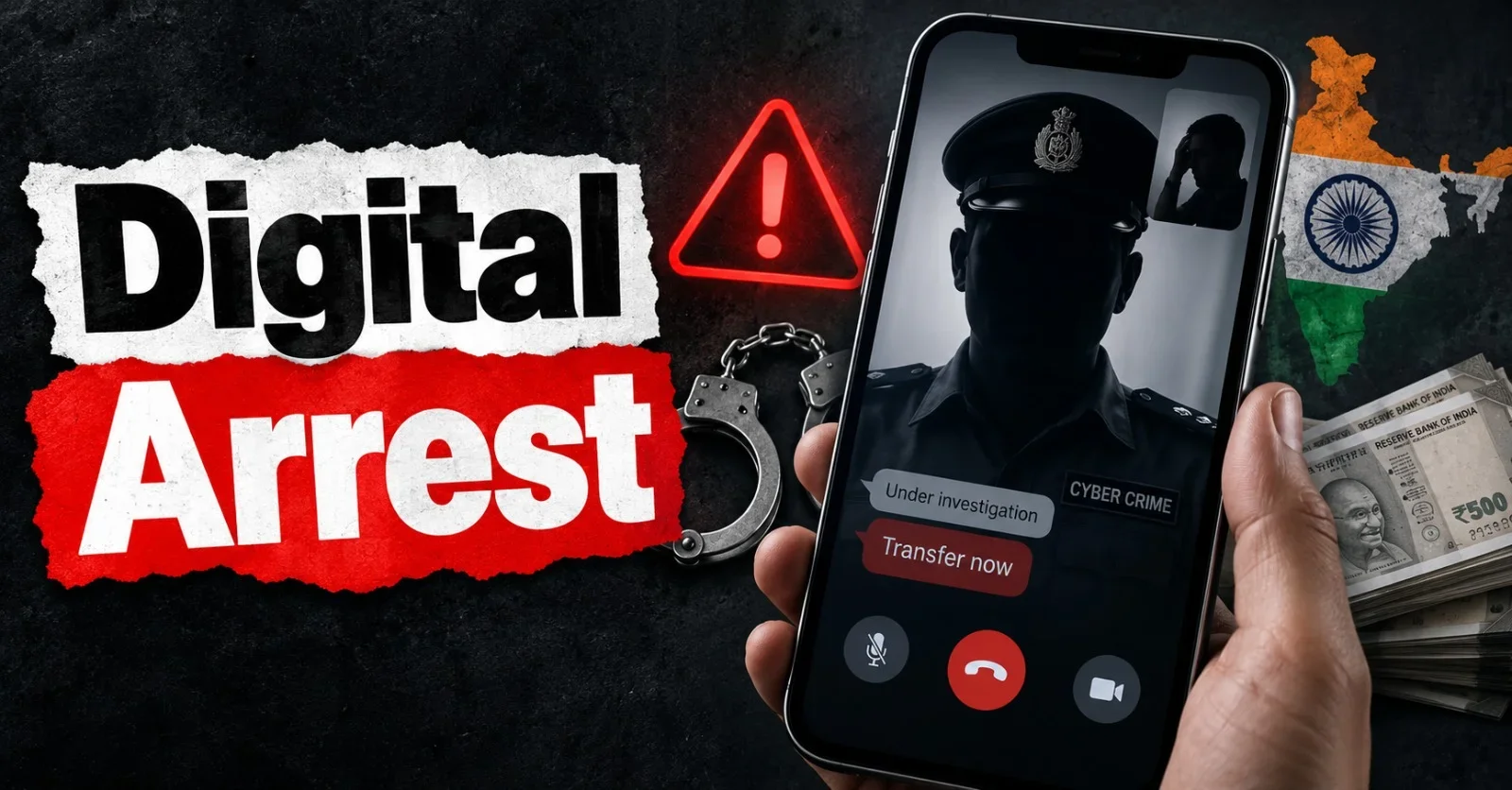
Digital arrest scams caused over ₹647 crore in reported losses in India during the first eight months of 2026. Learn the warning signs and how to report cyber fraud.
Have you received a phone call from someone claiming to be a police officer or a Central Bureau of Investigation (CBI) official? Are they accusing you of being linked to a criminal case and demanding that you stay on a video call or transfer money immediately? Be cautious. You could be facing a cybercrime known as a digital arrest scam.
Fraudsters are increasingly exploiting fear, impersonation and fake official documents to trick people into handing over their money. They may pose as police officers, customs officials or representatives of investigative agencies, claiming that a person’s identity documents, bank account or mobile number has been linked to illegal activity.
Grow Your Business with Janatha Mirror
Reach 50,000+ daily readers across Andhra & Telangana
Over 21,900 complaints reported in eight months
More than 21,900 digital arrest scam complaints involving over ₹647 crore were registered across India between January 1 and August 31, 2026, according to a status report submitted by the Indian Cybercrime Coordination Centre (I4C) and the Ministry of Home Affairs (MHA) to the Supreme Court. The figures were reported by Hindustan Times on October 23, 2026.
The report highlights the scale of the financial losses caused by this type of cyber fraud. Although complaints declined compared with previous years, the amount reportedly lost remains substantial.
How does a digital arrest scam work?
Fraudsters often follow a series of steps to manipulate their targets.
Grow Your Business with Janatha Mirror
Reach 50,000+ daily readers across Andhra & Telangana
1. They impersonate officials: Callers claim to represent the police, CBI, Enforcement Directorate, customs or another government agency.
2. They make frightening allegations: Victims may be told that a parcel containing illegal items has been intercepted or that their identity documents or bank account have been used in a crime.
3. They use fake evidence: Scammers may display forged identity cards, fabricated legal documents or official-looking backgrounds during video calls to appear convincing.
Grow Your Business with Janatha Mirror
Reach 50,000+ daily readers across Andhra & Telangana
4. They isolate the victim: The target may be ordered not to speak to family members, friends or anyone else while the supposed investigation is underway.
5. They demand money: Under the pretext of verification, security deposits or clearing the person’s name, scammers pressure victims to transfer funds or reveal confidential banking information.
The objective is to create panic and prevent the victim from independently verifying the claims.
Five ways to protect yourself
Do not transfer money under pressure. A caller claiming to be a government official does not automatically make the demand legitimate.
Never share confidential banking details. Do not disclose OTPs, UPI PINs, passwords or other security credentials.
Avoid installing unknown apps. Do not install remote-access or screen-sharing applications at a stranger’s request.
Speak to someone you trust. A caller who insists that you must remain isolated or tell nobody should raise immediate suspicion.
Verify independently. End the call and contact the relevant agency through contact details listed on its official website.
Remember that a convincing video call, uniform or document can be faked. Do not rely on these alone to establish someone’s identity.
What should you do if you lose money?
If you suspect that you have been targeted by cyber fraud, act immediately.
Call India’s national cybercrime helpline at 1930.
File a complaint through the official National Cyber Crime Reporting Portal.
Contact your bank immediately and report the suspicious transaction.
Preserve evidence, including phone numbers, messages, screenshots and transaction records.
Do not pay anyone who promises to recover your money in exchange for an advance fee.
Reporting the incident quickly may help authorities and banks trace the transaction and take action. However, recovery is not guaranteed.
Why awareness matters
Digital arrest scams rely less on sophisticated technology than on psychological pressure. Fraudsters try to make victims believe they are facing immediate arrest or serious legal consequences, leaving them little time to think clearly.
The safest response is to pause, verify the claims independently and seek help from trusted people. Genuine concerns about a legal matter should be addressed through verified official channels, not through rushed payments demanded over an unsolicited phone or video call.
The key takeaway: Never let fear make financial decisions for you. If someone threatens you over a call and demands money to settle an alleged case, stop and verify before taking any action.
💬 Reader Opinions & Discussion0
Login Required to Share Your Opinion
Only verified and logged-in readers can post opinions on Janatha Mirror news stories.