
Telangana Faces October Rainfall Deficit: What It Means for Farmers and Water Supply
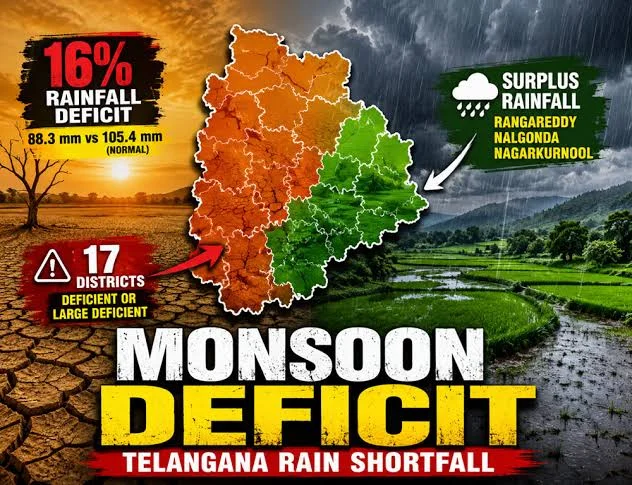
Telangana recorded a 95% October rainfall deficit through October 21. Learn what it means for farmers, crops, reservoirs and drinking-water supplies.
Telangana is facing a severe October dry spell, raising concerns about crop health, irrigation requirements and drinking-water availability. The state received only 3.5 mm of rainfall between October 1 and 21, compared with the normal 75.6 mm for the same period, marking a 95% rainfall deficit, according to reports citing India Meteorological Department (IMD) data.
The dry spell follows a below-normal southwest monsoon, adding pressure to agricultural operations and the state’s water resources. Twelve districts reportedly recorded no rainfall during the first 21 days of October, while the remaining districts also experienced substantial shortfalls.
Grow Your Business with Janatha Mirror
Reach 50,000+ daily readers across Andhra & Telangana
How the Rainfall Deficit Could Affect Farmers
The lack of rain is a concern for farmers who depend on rainfall to maintain soil moisture and reduce irrigation costs. Crops at sensitive growth stages may need additional water, while prolonged dry conditions can increase the risk of crop stress and lower yields.
Some farmers have reportedly turned to water tankers to protect standing paddy crops, adding to cultivation expenses. The impact is likely to vary according to crop type, soil conditions, access to irrigation and the amount of water available locally.
Cotton, paddy and other crops may face different levels of stress. Farmers should therefore follow crop-specific guidance from local agriculture officers and agricultural scientists rather than assume that the same response is suitable for every field.
Grow Your Business with Janatha Mirror
Reach 50,000+ daily readers across Andhra & Telangana
Reservoir Storage and Drinking-Water Concerns
The rainfall shortage is also putting the spotlight on reservoirs and groundwater. Telangana’s Irrigation Decision Support System reported that, as of October 22, the state’s 87 monitored reservoirs held 470.55 thousand million cubic feet (TMC) against a combined capacity of 1,059.3 TMC, or about 44.4% of capacity.
Reservoir storage alone does not determine the water available to every town or village. Supply also depends on the reservoir serving a particular area, existing allocations, pumping and distribution infrastructure, groundwater conditions and demand.
In Hyderabad, reports have raised concerns about the pressure on drinking-water supplies in areas dependent on reservoirs with limited storage. However, a rainfall deficit does not automatically mean that every locality will face immediate cuts. Residents should follow official announcements from the relevant water-supply authorities.
Grow Your Business with Janatha Mirror
Reach 50,000+ daily readers across Andhra & Telangana
What Can Farmers Do During the Dry Spell?
Farmers can reduce avoidable water losses by checking soil moisture before irrigation, using available water efficiently and prioritising fields or crop stages that need it most. Where suitable, drip or other efficient irrigation methods, mulching and field-level water conservation can help reduce evaporation and improve the use of limited supplies.
Decisions about sowing or expanding water-intensive crops during the next season should be based on local water availability, soil conditions, crop duration and advice from agricultural experts. Farmers should also check with local officials about eligible crop-loss assessments, relief measures and subsidised seed options.
Will More Rain Reduce the Deficit?
The rainfall outlook remains uncertain. Meteorologists have cautioned that the northeast monsoon does not necessarily bring widespread or sufficient rainfall to Telangana, even when it begins in neighbouring southern states. Any improvement will depend on the development and movement of favourable weather systems.
A few spells of rain could help soil moisture in some areas, but the extent of relief would depend on how much rain falls, where it falls and whether it arrives at a useful time for crops and water storage.
Why Water Planning Matters Now
The October rainfall deficit highlights the importance of careful reservoir management, groundwater conservation and efficient irrigation. Authorities face the challenge of balancing agricultural needs with drinking water and other essential uses if dry conditions persist.
For farmers and households, the immediate priorities are to conserve available water, follow local advisories and monitor official updates. The longer-term impact will depend on subsequent rainfall, crop conditions and how effectively the state manages its water resources.
💬 Reader Opinions & Discussion0
Login Required to Share Your Opinion
Only verified and logged-in readers can post opinions on Janatha Mirror news stories.