
Trump calls it the ‘greatest real estate deal’, but what has the US actually secured?
We Got Them Both: Trump’s Greenland and Venezuela Claims Explained
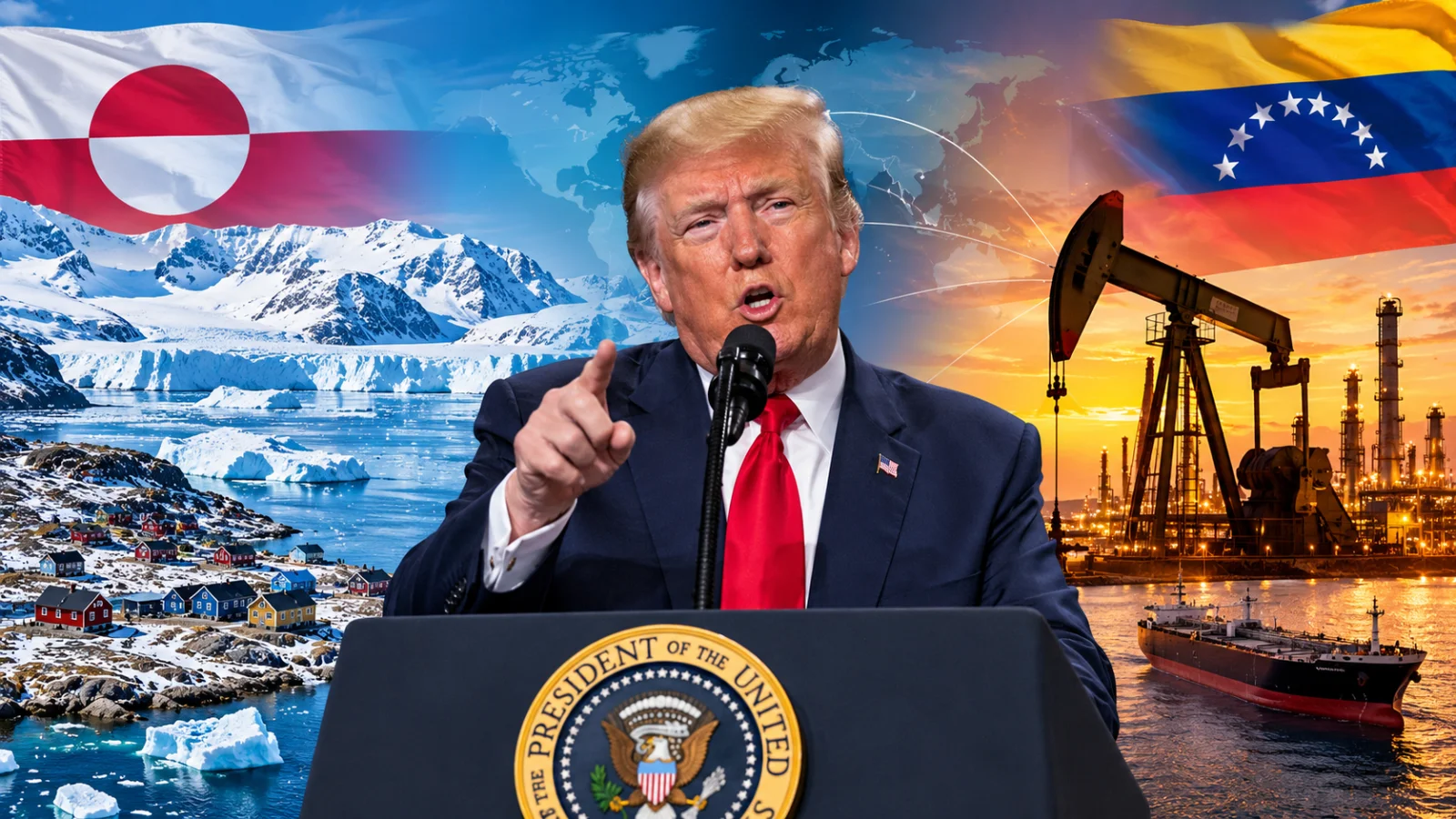
Trump’s Greenland and Venezuela Claims
Donald Trump claims the US has secured Greenland and Venezuela in what he calls a historic real estate deal. Here is what his remarks mean and why the claims need to be distinguished from the legal status of both territories.
‘We Got Them Both’: Trump’s Greenland and Venezuela Claims Raise Global Questions
What if a world leader described two strategically important territories as the biggest real estate deal in history? That is the question drawing international attention after US President Donald Trump claimed that America had secured Greenland and Venezuela. His striking words have reignited debate over US ambitions, Arctic security, oil resources and the limits of political power.
Grow Your Business with Janatha Mirror
Reach 50,000+ daily readers across Andhra & Telangana
Trump’s ‘Greatest Real Estate Deal’ Remark
Trump made the remarks while addressing supporters at a rally in Perry, Georgia. Referring to Greenland and Venezuela, he presented the claimed developments as a major achievement for the United States and used the phrase “We got them both.”
Grow Your Business with Janatha Mirror
Reach 50,000+ daily readers across Andhra & Telangana
The statement has attracted attention because the two territories have very different political circumstances, yet both hold strategic importance for Washington.
However, a presidential claim should not be confused with a confirmed transfer of territory. The legal status of a country or territory depends on established legal and political arrangements, not simply on a speech or public announcement.
Grow Your Business with Janatha Mirror
Reach 50,000+ daily readers across Andhra & Telangana
Why Greenland Is Strategically Important
Greenland’s position in the Arctic makes it important for international security. Its location supports strategic monitoring, early-warning capabilities and defence planning across the North Atlantic and Arctic regions.
The territory has also attracted interest because of its mineral potential and the economic opportunities associated with Arctic shipping and natural-resource exploration.
Greenland is part of the Kingdom of Denmark and has extensive self-government. Its future involves political, legal and diplomatic considerations, including the rights and interests of its population.
Read Also:
Although the United States has significant security interests in the Arctic, strategic importance does not automatically translate into ownership. Any claim that Greenland has changed hands must be supported by evidence of a valid legal process.
What the US-Denmark Agreement Actually Means
Agreements between the United States and Denmark may cover defence cooperation, maritime industries, technology or other shared interests. Such arrangements can strengthen bilateral relations without changing the sovereignty of Greenland.
The specific terms of an agreement are therefore crucial. An arrangement that excludes Greenland cannot be treated as proof that the territory has been transferred to Washington.
This distinction matters because cooperation, access and ownership are three separate concepts. A country may have military access or commercial opportunities in a territory without possessing sovereignty over it.
Readers should assess the reported agreement according to its actual provisions rather than relying solely on political descriptions of the deal.
Why Venezuela Features in Trump’s Statement
Venezuela adds another dimension to the story because of its substantial oil resources and its complicated relationship with the United States.
The country’s energy sector has long attracted international attention. Diplomatic tensions, political developments and disagreements over energy policy have all influenced relations between Washington and Caracas.
Trump’s remarks place Venezuela within a broader discussion of American strategic and economic interests. However, political influence or access to natural resources does not mean that a country has become part of another nation.
Venezuela remains a separate sovereign state. Any claim that its territory has been transferred to the United States would require clear and verifiable evidence, not merely a statement by a political leader.
Political Rhetoric Versus Territorial Sovereignty
The central issue is the difference between claiming a strategic victory and establishing a legally recognised change in territorial status.
Sovereignty refers to a state’s authority over its territory and its independence in conducting its affairs. Defence partnerships, business agreements and diplomatic negotiations do not automatically transfer that authority.
Greenland’s status is linked to the Kingdom of Denmark and its system of self-government. Venezuela, meanwhile, remains an independent country with its own territorial identity.
These distinctions are essential when interpreting dramatic political statements. Without verified evidence of a formal change, describing either territory as newly acquired US land would be misleading.
What Could Happen Next?
Trump’s remarks may intensify discussion about American foreign policy, Arctic defence, international energy interests and relations with other governments.
For Greenland, attention is likely to remain on security cooperation, its relationship with Denmark and the political future of the Arctic region.
For Venezuela, the key issues include diplomatic relations, political stability and the future of its oil industry.
Further announcements or negotiations could influence these debates. However, any assessment of territorial acquisition must be based on confirmed agreements and the applicable legal framework.
Conclusion
Trump’s claim that the United States has “got them both” has placed Greenland and Venezuela at the centre of a fresh international debate. Yet bold political language is not the same as a completed territorial transfer.
The real story lies in understanding why both territories matter to Washington, what formal agreements actually establish and how sovereignty is determined. Until a valid change in territorial status is demonstrated, neither Greenland nor Venezuela should be described as having become part of the United States.
Read also:
💬 Reader Opinions & Discussion0
Login Required to Share Your Opinion
Only verified and logged-in readers can post opinions on Janatha Mirror news stories.