
India Updates Vehicle Safety Standards, with Key Requirements Starting from 2027
India Updates Vehicle Safety Standards, with Key Requirements Starting from 2027
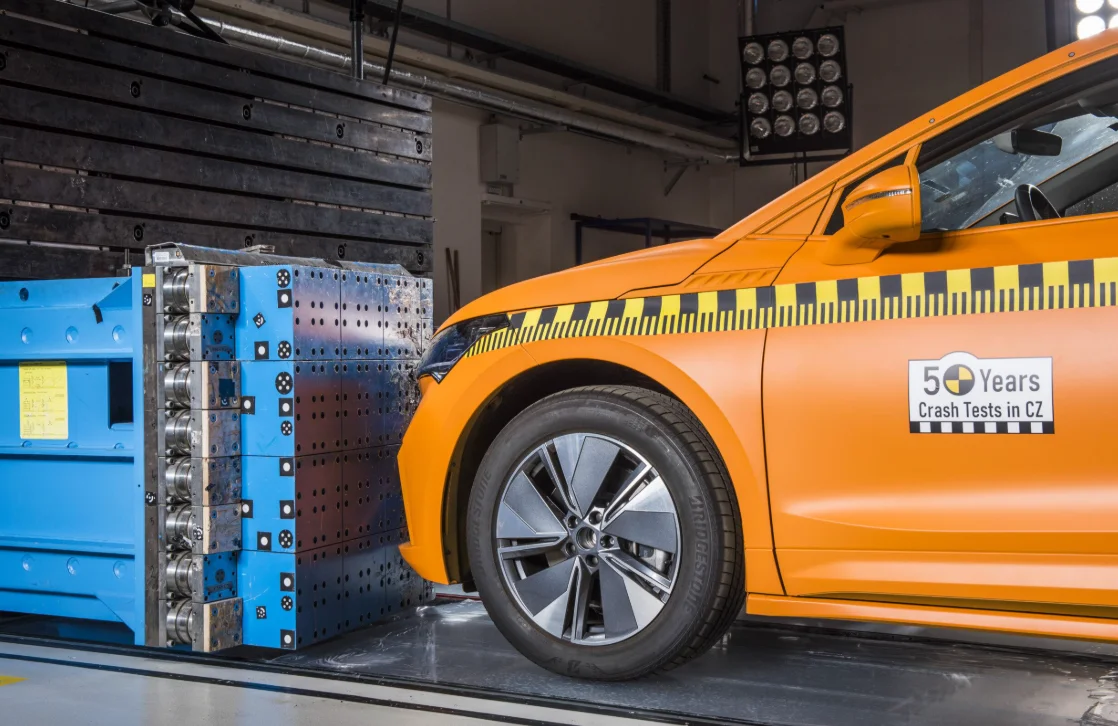
Revised requirements cover crash protection, fuel leakage, EV battery safety and event data recorders, with different implementation dates.
New Delhi, October 25: India is moving towards tighter vehicle safety requirements covering crash protection, fuel systems, electric-vehicle batteries and pedestrian safety. The changes will take effect in phases, with several important requirements scheduled for 2027–2029, according to a report published by The Economic Times on October 23.
The Ministry of Road Transport and Highways has updated technical standards intended to reduce risks such as fuel leakage, post-crash fires and electrical hazards in electric vehicles.
Grow Your Business with Janatha Mirror
Reach 50,000+ daily readers across Andhra & Telangana
Fuel-System Protection After Rear-Impact Crashes
Revised requirements under Automotive Industry Standard AIS-101 address the behaviour of fuel systems during rear-impact crash tests. The rules aim to limit fuel leakage and reduce the risk of a fire following a collision.
The updated requirements are scheduled to apply to new vehicles manufactured from April 2029, according to the report.
Additional Protection for Electric-Vehicle Batteries
The revised standards also cover electric power-drive systems. Battery packs and their securing mechanisms must remain properly positioned during and after specified impact tests. The rules also address electrical risks, including the disconnection of high-voltage circuits following a crash.
Grow Your Business with Janatha Mirror
Reach 50,000+ daily readers across Andhra & Telangana
These provisions are intended to reduce the possibility of electrical hazards when an EV is involved in a collision.
Event Data Recorders: An Important Distinction
The government has made Automotive Industry Standard AIS-192 applicable to event data recorders installed in vehicles from October 2029. These devices can record information about vehicle behaviour immediately before and during a crash, helping investigators reconstruct an incident.
However, the report clarifies that the standard does not make event data recorders compulsory in every car. It sets requirements for devices when they are installed.
Grow Your Business with Janatha Mirror
Reach 50,000+ daily readers across Andhra & Telangana
Other crash-protection and pedestrian-safety requirements are expected to be introduced in phases. The exact applicability depends on the relevant rule and implementation date.
Market Perspective
Stronger safety standards can improve occupant protection and help establish more consistent vehicle-safety expectations. They can also require manufacturers to adjust vehicle designs, components and testing processes.
For consumers, the practical step is to check the safety equipment and official specifications of the exact model and variant being purchased. A general announcement about future standards should not be interpreted as proof that every requirement already applies to every vehicle currently on sale.
💬 Reader Opinions & Discussion0
Login Required to Share Your Opinion
Only verified and logged-in readers can post opinions on Janatha Mirror news stories.