
India Amends Vehicle Rules to Allow E100 Fuel in Compatible Flex-Fuel Cars
India Amends Vehicle Rules to Allow E100 Fuel in Compatible Flex-Fuel Cars
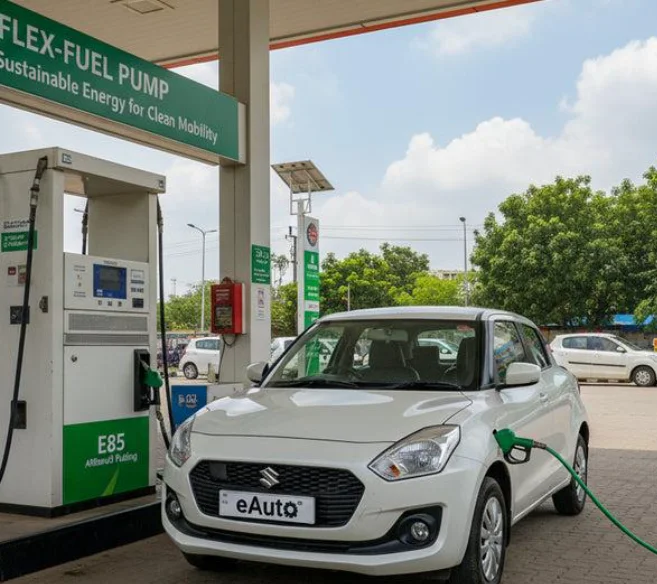
The regulatory change recognises 100% ethanol fuel, but conventional petrol cars cannot automatically use E100.
New Delhi, October 27: The Union government has amended vehicle emission-related rules to recognise E100, a fuel containing 100% ethanol, for compatible flex-fuel vehicles. The change expands the regulatory framework for alternative automotive fuels, according to reports published by The Economic Times on October 27.
The amended provisions also recognise E100 alongside E85, which contains a higher proportion of ethanol blended with petrol. The change provides a regulatory basis for manufacturers to develop or certify vehicles designed to operate on these fuel blends.
Grow Your Business with Janatha Mirror
Reach 50,000+ daily readers across Andhra & Telangana
What Is E100 Fuel?
E100 refers to fuel consisting of 100% ethanol. Unlike conventional petrol, ethanol has different chemical and combustion characteristics, meaning engines and fuel systems must be specifically designed or adapted to use it safely and efficiently.
The rule change does not mean every petrol vehicle can immediately switch to E100. Vehicle compatibility, manufacturer certification and the availability of suitable fuel remain essential.
Can Existing Petrol Cars Use E100?
Owners should not fill ordinary petrol cars with E100 unless the vehicle manufacturer explicitly certifies the model for that fuel. Using an incompatible fuel can affect engine operation and fuel-system components.
Grow Your Business with Janatha Mirror
Reach 50,000+ daily readers across Andhra & Telangana
The regulatory amendment recognises the fuel within the vehicle framework, but it does not itself establish nationwide E100 availability. No nationwide rollout date was announced in the cited report.
Why the Change Matters
India has been promoting ethanol blending as part of efforts to diversify transport fuels, support domestic agricultural supply chains and reduce dependence on imported crude oil. Higher-ethanol fuels could create additional options for compatible vehicles if production, distribution and vehicle technology develop together.
However, the overall environmental and economic benefits depend on how the ethanol is produced, its delivered price, vehicle efficiency and the infrastructure needed to distribute it.
Grow Your Business with Janatha Mirror
Reach 50,000+ daily readers across Andhra & Telangana
Market Perspective
The amendment is an enabling regulatory step, not a signal that motorists should immediately change fuels. Automakers, fuel suppliers and regulators will need to coordinate on compatible models, fuel specifications and distribution.
Consumers should follow the fuel recommendations in their vehicle manuals and wait for clear manufacturer guidance before considering E100.
💬 Reader Opinions & Discussion0
Login Required to Share Your Opinion
Only verified and logged-in readers can post opinions on Janatha Mirror news stories.