
AI Lessons from Class 3? The New Direction of School Education in India
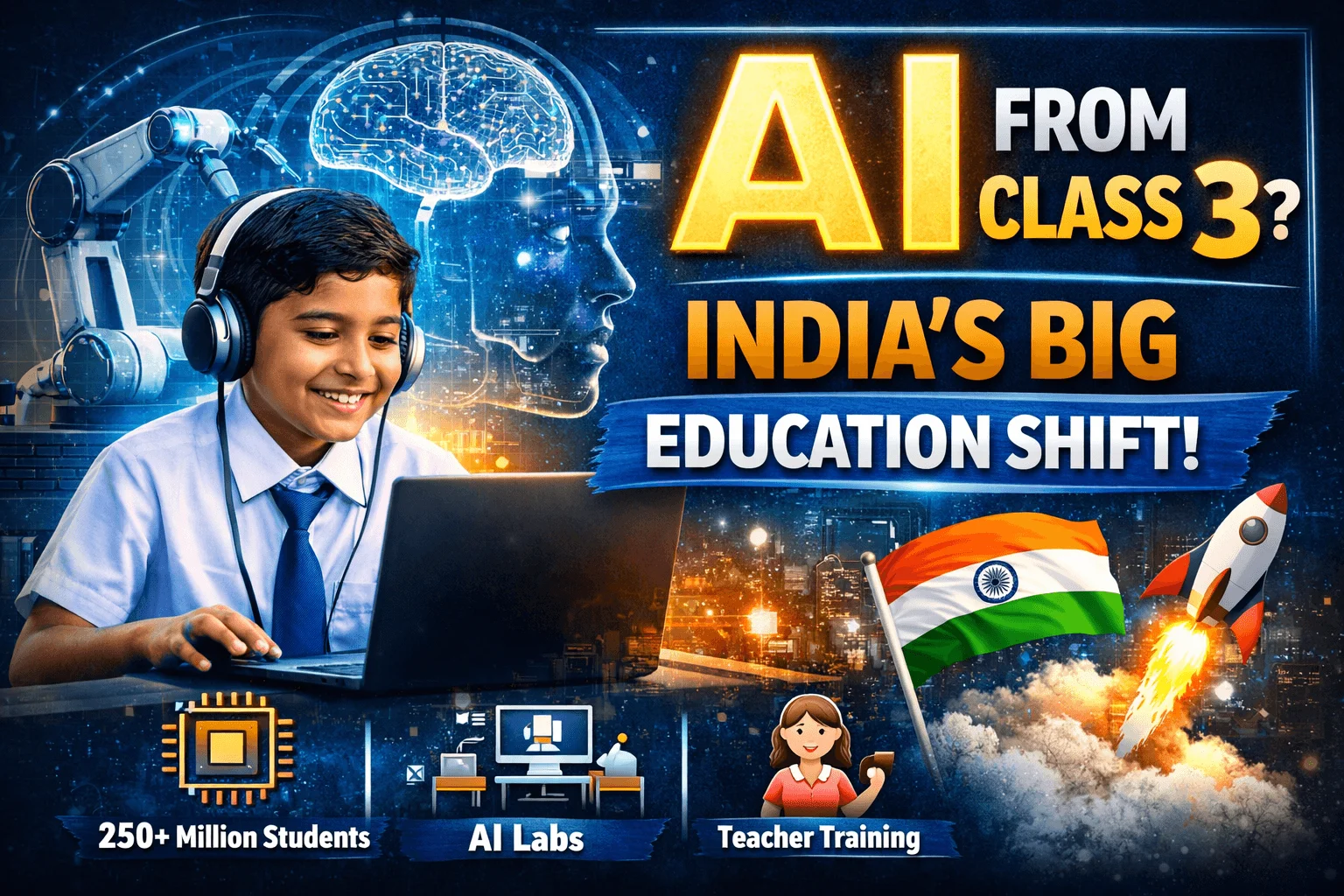
India’s 2026–27 school curriculum introduces computational thinking and AI-related learning for Classes III to VIII, focusing on logic, patterns and data literacy.
Technology Is Reaching Younger Learners
Artificial intelligence is no longer a topic reserved for university students and technology professionals. India is moving towards introducing computational thinking and AI-related learning at school level, helping children understand not only how to use digital tools but also how to approach problems logically. The broader goal is to build foundational skills that can support learning across different subjects.
Grow Your Business with Janatha Mirror
Reach 50,000+ daily readers across Andhra & Telangana
What Changes in the 2026–27 Academic Year?
According to information released by the Ministry of Education in August 2026, NCERT, in collaboration with CBSE, introduced a dedicated Computational Thinking and Artificial Intelligence curriculum for Classes III to VIII for the 2026–27 academic year. The curriculum focuses on areas such as logical reasoning, pattern recognition, algorithm design and data literacy, alongside responsible and ethical use of technology.
Grow Your Business with Janatha Mirror
Reach 50,000+ daily readers across Andhra & Telangana
What Will Students Actually Learn?
Computational thinking does not simply mean learning to write computer code. It also involves breaking a complicated problem into smaller steps, recognising patterns and developing a clear sequence for finding a solution. AI-related learning can introduce students to how data is used, how digital systems identify patterns and why technology-generated information needs to be checked rather than accepted automatically.
Grow Your Business with Janatha Mirror
Reach 50,000+ daily readers across Andhra & Telangana
Why Teachers and Schools Matter
Introducing a curriculum is only one part of the process. Teachers need suitable training, age-appropriate learning materials and opportunities for students to practise new concepts. Schools also need to consider unequal access to digital devices and reliable internet, particularly in areas with limited resources. Students should learn about the limitations of AI, including the possibility of inaccurate information, as well as its potential benefits.
Preparing Students for a Changing World
Digital literacy and problem-solving skills may help students adapt to future study and work environments. However, AI education should complement rather than replace foundational learning in language, mathematics, science and creative thinking. The most useful approach will combine technological understanding with independent reasoning, responsible decision-making and the ability to question information critically.
💬 Reader Opinions & Discussion0
Login Required to Share Your Opinion
Only verified and logged-in readers can post opinions on Janatha Mirror news stories.