
AI Jobs in India: Will Freshers Lose Their First Career Opportunity? IIT Madras Report Raises a Bigger Concern
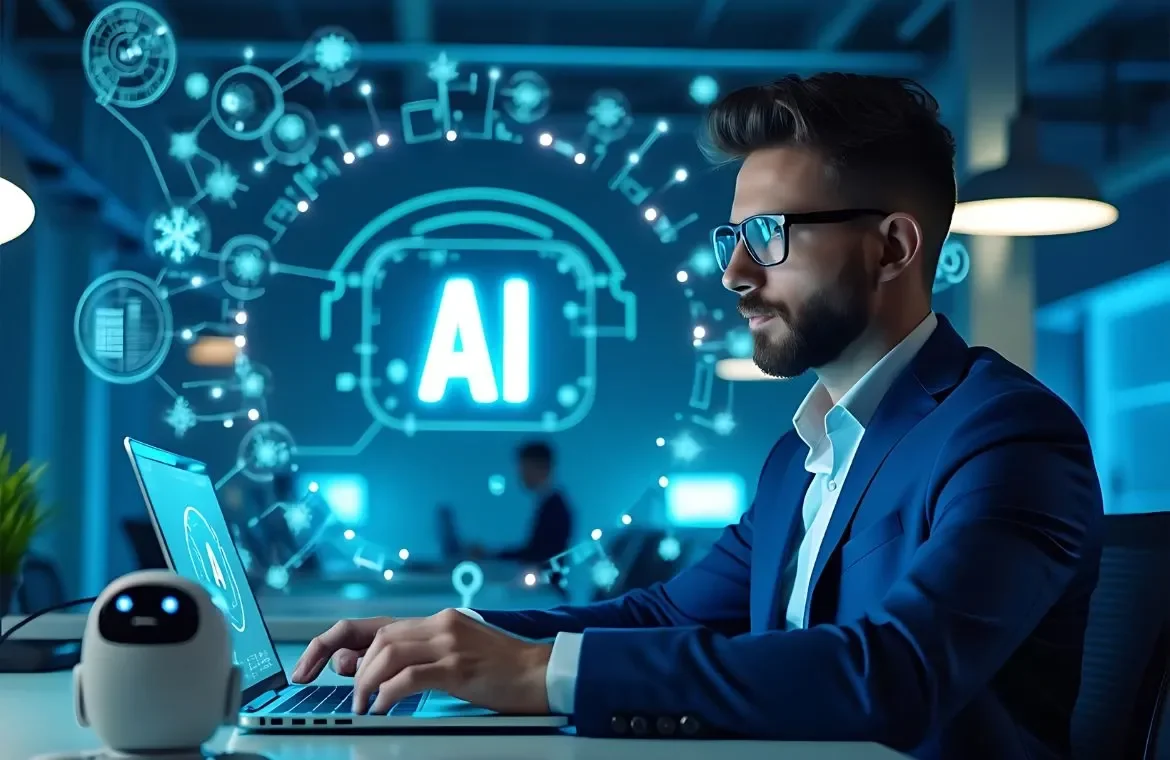
An IIT Madras report explains how AI could reshape entry-level jobs in India, affect career progression and increase the need for reskilling and practical experience.
Will artificial intelligence take away jobs—or make it harder for fresh graduates to build a career? A new white paper from the Indian Institute of Technology Madras (IIT Madras) highlights a concern that goes beyond job losses: AI could change the entry-level work through which young professionals traditionally gain experience and progress to senior positions.
The report, titled How AI Is Reconfiguring Work in India, was prepared by the Centre for Responsible AI (CeRAI) at IIT Madras. It argues that AI's impact on employment should be assessed by looking at individual tasks rather than assuming that entire professions will either disappear or remain unaffected.
Grow Your Business with Janatha Mirror
Reach 50,000+ daily readers across Andhra & Telangana
AI May Change Jobs Without Eliminating Them
AI tools can automate certain repetitive activities, assist employees with routine work and help organisations complete tasks more quickly. However, the ability to automate a task does not automatically mean that an entire job will disappear.
The impact depends on the type of work, the capabilities and cost of AI tools, regulatory requirements, safety considerations and how employers choose to redesign jobs.
This distinction is important for India, where sectors such as information technology, business process outsourcing (BPO), finance and professional services offer employment opportunities to many graduates.
Grow Your Business with Janatha Mirror
Reach 50,000+ daily readers across Andhra & Telangana
Why Could Freshers Face a Bigger Challenge?
Entry-level employees often begin their careers by handling routine assignments such as basic coding, data processing, documentation, customer support and preliminary research. These tasks may appear simple, but they also help young workers understand professional workflows, learn from mistakes and develop judgement.
If AI takes over a growing share of these responsibilities, employers may need fewer people for some routine activities or may expect new recruits to handle more complex work earlier in their careers.
The bigger concern is what happens to the learning process. If fresh graduates have fewer opportunities to perform basic tasks under supervision, they may also have fewer chances to develop the practical experience needed for higher-responsibility positions.
Grow Your Business with Janatha Mirror
Reach 50,000+ daily readers across Andhra & Telangana
This does not mean every company will reduce fresher hiring. Instead, the report raises questions about how employers will train junior employees and build a pipeline of experienced professionals.
Which Sectors Could See Changes?
The report examines AI's potential effects across several sectors, including:
Information technology: AI-assisted coding, testing and documentation may change the responsibilities of junior software professionals.
BPO and customer service: AI systems may handle routine enquiries, while human employees focus on complicated cases and customer concerns that require judgement.
Finance and accounting: Some data-processing, bookkeeping and document-review activities may become more automated.
Professional services: Research, document preparation and other routine tasks could be reorganised as AI tools become more widely used.
The scale of change will vary between organisations and occupations. Tasks involving complex decisions, accountability, human interaction or regulatory compliance may continue to require substantial human involvement.
Read also:JEE Main 2027 Session 1 Registration: Applications Open — Check How to Apply and Key Details
Will AI Also Create New Job Opportunities?
Yes, AI adoption can create demand for new responsibilities, including evaluating AI outputs, managing automated workflows, checking system performance and supporting the responsible use of AI.
However, the creation of new roles does not automatically guarantee that workers affected by automation can move into them. Employees may need additional training, practical experience and access to suitable opportunities.
That is why the IIT Madras paper stresses the importance of examining not only which tasks can be automated, but also how workers can transition into changing or emerging roles.
What Should Students and Fresh Graduates Do Now?
For students and job seekers, the practical response is to build a combination of subject knowledge, workplace skills and AI awareness.
1. Learn to use AI tools: Understand how AI can assist with research, coding, writing, analysis or other tasks relevant to your field.
2. Strengthen the fundamentals: AI tools are more useful when you understand the subject well enough to identify incorrect or incomplete results.
3. Build practical experience: Internships, projects, portfolios and real-world assignments can demonstrate your ability to solve problems beyond completing routine tasks.
4. Develop critical thinking: Learn to verify information, assess alternatives and explain why a particular solution is appropriate.
5. Improve communication and teamwork: Clear communication, collaboration and the ability to understand customer or business needs remain valuable workplace skills.
6. Keep learning: As job responsibilities change, regularly update your skills instead of relying only on qualifications gained at the beginning of your career.
What Does the IIT Madras Report Recommend?
The white paper calls for wider access to affordable AI tools, more India-specific research into how AI affects work and clearer pathways for workers to learn new skills and transition into changing roles.
It also highlights the role of employers in redesigning jobs so that AI-driven productivity improvements do not come at the expense of workers' opportunities to learn and advance.
The Bigger Question: Who Will Train Tomorrow's Experienced Professionals?
The debate over AI and employment is not simply about counting jobs gained or lost. It is also about how people acquire the experience needed to progress through their careers.
If AI handles more of the routine work traditionally assigned to junior employees, companies may need to rethink training, mentorship and early-career responsibilities.
For fresh graduates, AI should be viewed neither as proof that jobs are disappearing nor as a technology that can be ignored. The more immediate challenge is to understand how work is changing and prepare for roles that combine technical knowledge, practical judgement and the effective use of AI.
💬 Reader Opinions & Discussion0
Login Required to Share Your Opinion
Only verified and logged-in readers can post opinions on Janatha Mirror news stories.